
G’day all, this the full Boeing 777 review, this includes all variants and the freighter version. If you haven’t yet seen my full Cub Crafters XCub review, make sure to check it out here here. This is before the rework of the 777 and you can keep up to date with the rework here here. All sources of information and helpers will be found at the bottom of this post. Without farther ado I present you the full Boeing 777 review.
Introduction
The Boeing 777 is a long-range wide-body twin-engine jet airliner developed and manufactured by Boeing Commercial Airplanes. Developed in consultation with eight major airlines, the 777 was designed to replace older wide-body airliners and bridge the capacity difference between Boeing’s 767 and 747. The 777 ranks as one of Boeing’s best-selling models; by 2018 it had become the most-produced Boeing wide-body jet, surpassing the Boeing 747. Infinite Flight the 777 is the second most used aircraft with the most popular being the 787 as seen in the chart below.
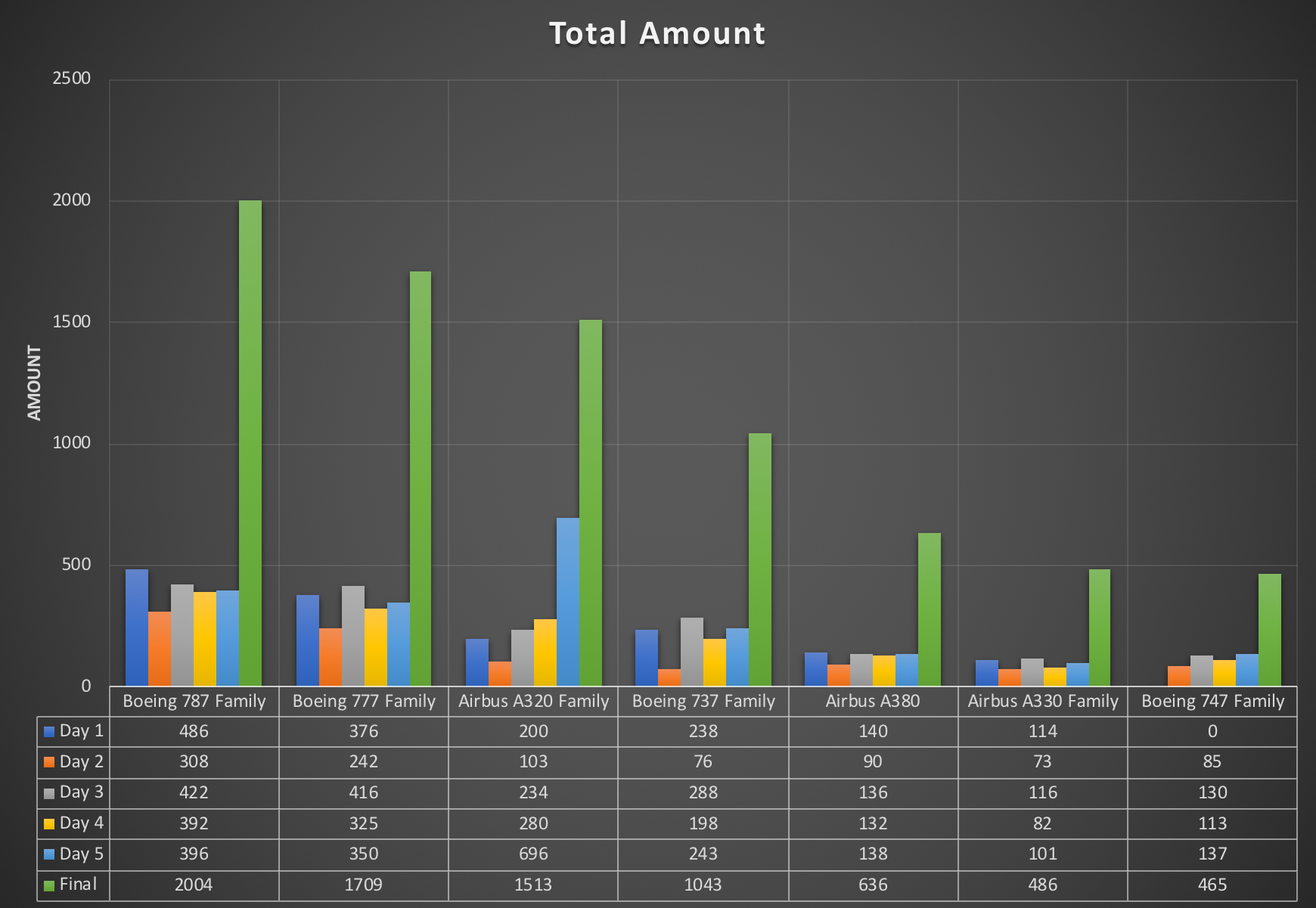
Please note that the data was collected over a span of 5 days, the 747’s first day is left blank because it wasn’t one of the top ten on that day but the days after it was.
Liveries
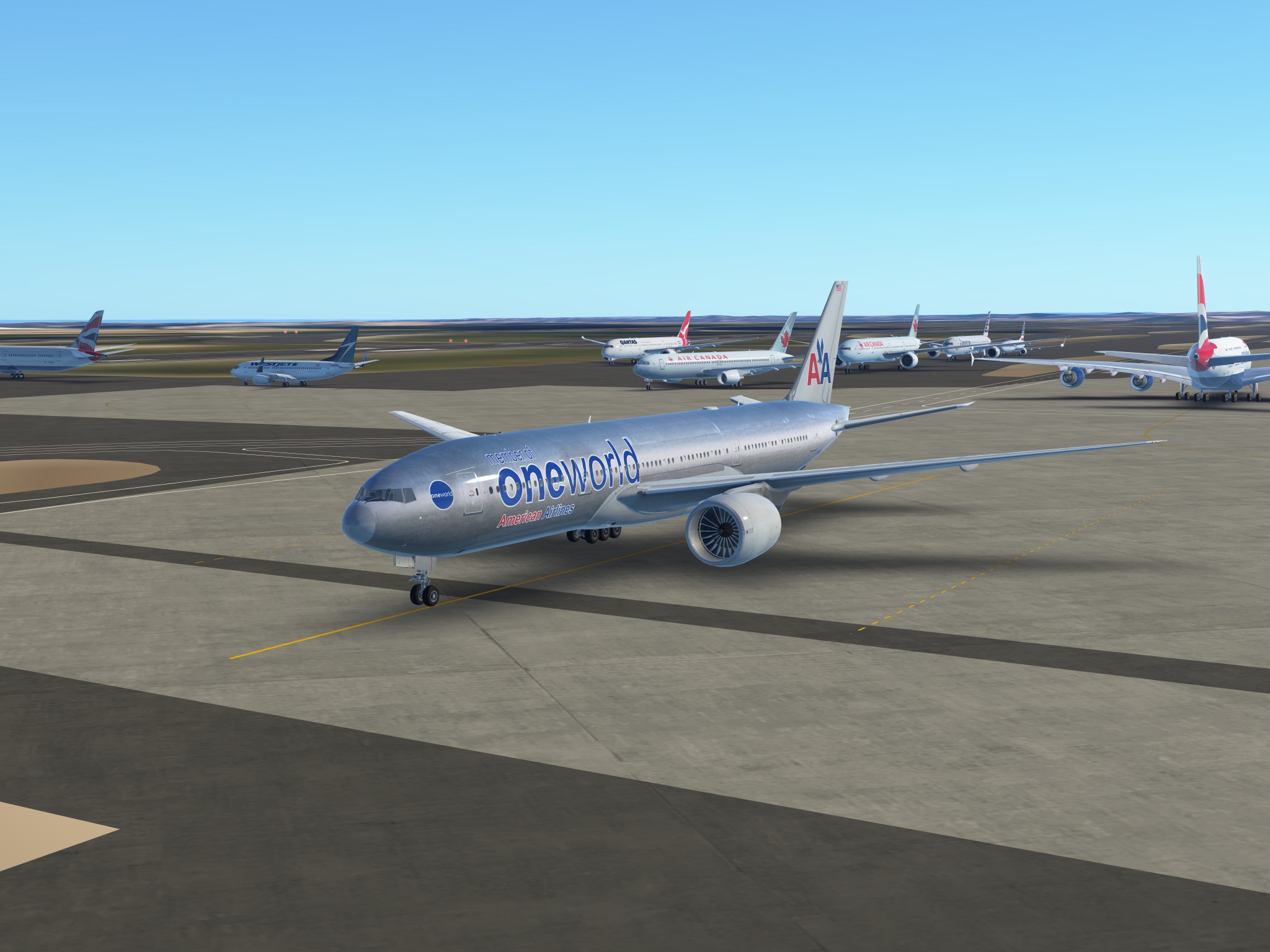
The Boeing 777 has over 40 liveries in IF and more being added in the future. If you want to see more liveries added in the future go vote for them in the Features category or make a feature request for the livery but make sure to sure for it prior to making the feature request.
Taxing
Taxing on the 777 is a breeze if you are familiar with it or used to flying the other big boys. I found the tail camera to be the most helpful and best way to taxi with the 777, it provides a full 180 degrees of view to avoid a collision. The only drawback is when lining up behind another aircraft or holding short of the runway as you cannot see because of the nose of the aircraft blocks out the view of the hold short line.

Takeoff
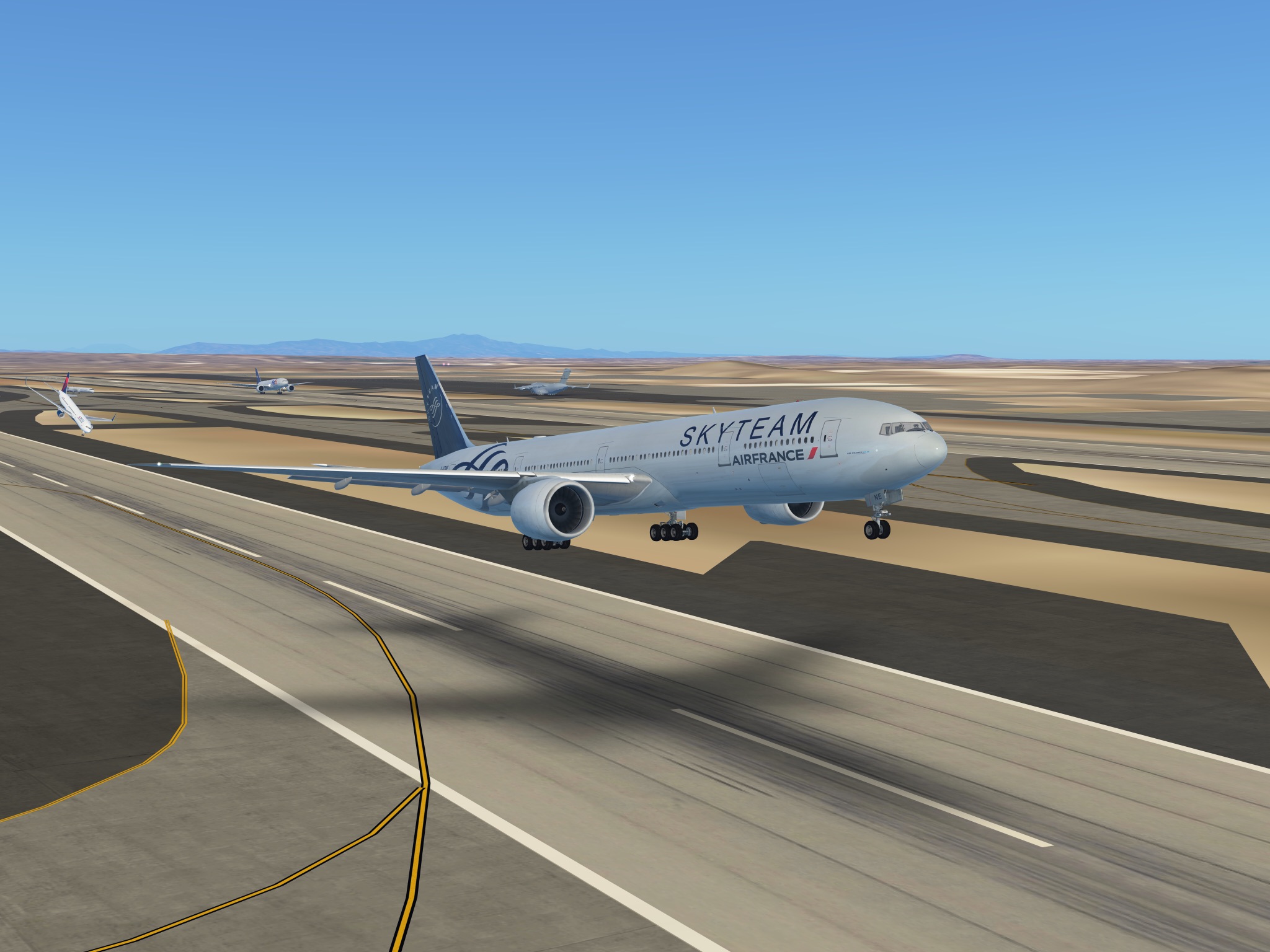
Takeoff in the 777 is a breeze if you know how to do it or are used to flying the big boy jets. So I find between 80% power and 90% power depending on your weight to be enough to get the beast off the ground if you are very heavy and your using 80% power you might have to apply more or full power to get airborne. Usually have flaps set to 15 degrees and rotate (liftoff) at 150 to 160 knots depending on my weight.
Climb
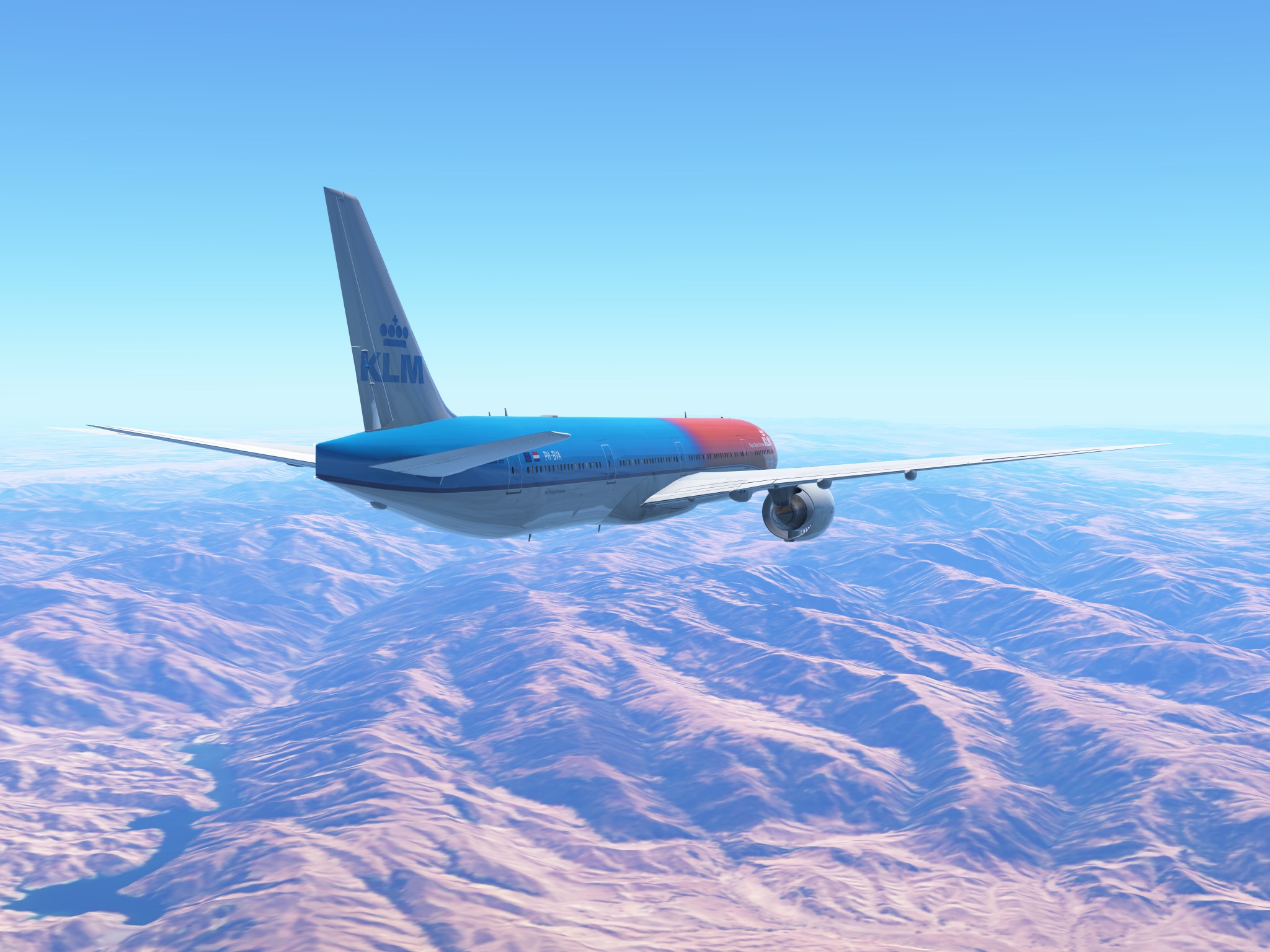
Climbing out is just easy as any wide body aircraft. I usually climb out without the auto throttle until I reach 230 knots airspeed and retract flaps from 15 degrees to 5 degrees to help the aircraft with lift. I also climb out with a VS (vertical speed) between 2000 FPM (Feet per minute) To 2700 FPM. As you climb to steep and your heavy as you get higher your throttle will slowly reach 100% power because the aircraft cannot handle your VS anymore so just simply lower your VS until your throttle starts going down to at least 80-90% power.

Cruise
Cruising on the 777 is not the same as cruising on the A320. If you are heavy and over the MLW (minimum landing weight) or above the MTOW (maximum takeoff weight) and climb straight to your final cruising altitude for example FL390 (39,000 feet) your going at have a very high nose up attitude, full throttle, losing airspeed and then your going to eventually stall out. So to make up for the higher aircraft weight you need to step climb which is here you climb to the most fuel efficient cruise altitude for your current weight, as you cruise at that altitude you will burn off some fuel then as a result will be lighter and able to climb to the next altitude for your current weight, by the end of the flight you would have reached your final cruise altitude of FL390. I found for short flights between 1 to 3 hours cruising between FL300 to FL350 if perfect and no need of step climbing. Other than that the aircraft if smooth during cruise and can easily fly the SQ21 flight from Newark to Singapore.

Descent
So descent in the 777 if nothing else but what you would expect from a A320. I usually start descent 150NM (nautical miles) or more depending on my altitude out from my destination but I take into consideration of the airports altitude so my descent rate into LAX would be different to my descent rate into Addis Ababa. It also uses a lot less thrust when descending unlike the A320, I will explain more in the next section.
Approach
So approach on the 777 can be a bit tricky because as you descend the throttle more often than not goes to idle and then you will start to gain speed but even if you deploy the speed breaks (spoilers) it takes a lot longer than the A320 because the wing is so thin that it’s harder to slow down and to add to the problem the 777 has a lot of inertia to add to the difficulty slowing down. I usually slow down to 230 Knots airspeed below 10,000 feet and deploy flaps 1 or 5 degrees depending on what I feel I need at the time also I descend down to 4 or 3 thousand feet depending on how high the airport is above sea level then once I’m established on the glide slope I enable the APPR (auto land).

Landing
So landing in the 777 is basically the same as any other wide body aircraft. I usually leave the APPR on the whole way down to touch down because even if I hold my device still and steady the plane proceeds to bank to the left, I also usually have a final approach speed of 150 knots airspeed and flaps full. I found that sometimes with the APPR on the plane floats down the runway a little bit then lands. Other than that it’s a very smooth aircraft on landing.

Extra
The cockpit on the 777 is mostly photoshopped into the aircraft as it’s very ugly. I hope you enjoyed this review. Please note that I may not fly realistically but I fly with what works for me and might not work for you. I have provided links to the sources used during this post. My next project is to complete the comparison is get that posted in the next couple of weeks. I am working on a very special and secret project as well so expect to see that soon, I thank you for your patience with me.

Conclusion
So in conclusion the Boeing 777 is a great aircraft to fly one thing I noticed that you cannot do on the 777 is open any window or door if a passenger farts so you have to deal with the smell until it goes away which can feel like an eternity. I know that the 777 is currently getting a rework and I will release a new updated version of this review once it’s complete.
Links
The Introductory Paragraph Boeing 777 Wikipedia
Other Topics
Make sure to check out my other reviews and comparisons that I have made.
The Full Cubcrafters XCub Review
In With The New Out With The Old, Volume 1
Please do not use images or information without my permission.